Are UPS Large Package Surcharges unexpectedly eating into your shipping budget?
These hidden fees can exceed $330 per package, dramatically inflate your shipping costs, and disrupt your bottom line.
In this comprehensive guide, we’ll explain:

What the UPS Large Package Surcharge is
How it’s calculated
How much it costs
How to avoid it and reduce other UPS surcharge fees

TL;DR:
Key takeaways
Large Package Surcharge: Applies if the longest side is over 96″, the combined length + girth exceeds 130″, cubic volume exceeds 17,280 in³, or actual weight exceeds 110 lbs.
Cost impact: Can add over $330 per package.
Minimum billable weight: A Large Package Surcharge is billed at a minimum of 90 lbs, regardless of actual or dimensional weight.
Additional fees: Other surcharges (e.g., Dimensional Weight, Residential Delivery, Fuel) may also apply.
Critical 2026 update: New cubic volume and weight triggers

Effective January 26, 2026, UPS introduced significant changes to how packages qualify for the Large Package Surcharge. These new criteria work in addition to existing length and girth thresholds—meaning packages that were previously “clean” may now trigger costly fees.
Want to see exactly how these changes affect your shipments? We built a free calculator that shows whether your packages will get hit under the new rules—and by how much. Just plug in your dimensions, weight, and volume. One example package went from a $52 surcharge to $320. Per package.
Try the free surcharge calculator here
New cubic volume criteria
Large Package Surcharge now applies if cubic volume exceeds 17,280 cubic inches (length × width × height).
New weight criteria
Large Package Surcharge now applies if actual weight exceeds 110 lbs—regardless of package dimensions.
Why this matters
Previously, a package measuring 30″ × 24″ × 24″ wouldn’t trigger the Large Package Surcharge because it didn’t breach the 96″ length or 130″ length-plus-girth thresholds. But that same package has a cubic volume of 17,280 cubic inches—which now triggers the surcharge.
Similarly, a compact but heavy package weighing 115 lbs that stayed under all previous size thresholds will now incur the Large Package Surcharge based purely on weight.
Bottom line: Review your packaging and product weights now. Many shippers will see surcharges on shipments that were previously exempt.

NOTE: These changes mirror FedEx’s 2026 Oversize Charge updates. Both carriers now use the same cubic volume (17,280 in³) and weight (110 lbs) thresholds for their large package fees.
What is a UPS Large Package Surcharge?
A UPS Large Package Surcharge is an extra fee for packages that exceed UPS’ standard size limits.
This surcharge is triggered when packages meet specific criteria in one of four ways:
The combined length plus girth (calculated as 2 x width + 2 x height) exceeds 130″ but is less than 165″.
The longest side (referred to as length) exceeds 96″.
Cubic volume exceeds 17,280 cubic inches (effective January 26, 2026)
Actual weight exceeds 110 lbs (effective January 26, 2026)
For international packages, the same 130″ combined length plus girth threshold applies, but there’s no length limit.
These oversized packages incur additional costs because they require extra handling, storage space, and labor to process. Even if the actual weight is lower, large packages are billed at a minimum of 90 lbs, except for UPS Ground shipments with freight pricing, which are exempt from this requirement.
The Large Package Surcharge is just one of several fees UPS may apply to a shipment. We’ll cover other fees and how to minimize them in the following sections.
NOTE: When a package qualifies for the Large Package Surcharge, UPS does not assess an Additional Handling charge.
Current Large Package Surcharge rates
Here’s a table with the current Large Package Surcharge prices for both domestic and international shipments (effective December 22, 2025):
Domestic Large Package Surcharge rates
| Delivery type | Zone 2 | Zones 3-4 | Zones 5-6 | Zone 7+ |
|---|---|---|---|---|
| Commercial | $219.50 | $239.50 | $273.00 | $286.00 |
| Residential | $254.50 | $274.50 | $320.50 | $331.00 |
International Large Package Surcharge rate
| Delivery type | Amount per package |
|---|---|
| International | $235 |
NOTE: UPS updated its zone structure in 2026 to separate Zones 5-6 from Zone 7+. This better reflects the cost differences for longer-distance shipments.
How to calculate your package size
Key maximum limits:
Length: Maximum of 96″ before the surcharge applies.
Combined length plus girth: Exceeding 130″ triggers the surcharge.
Cubic volume: Exceeding 17,280 in³ triggers the surcharge (effective January 26, 2026).
Actual weight: Exceeding 110 lbs triggers the surcharge (effective January 26, 2026).
To determine if your shipment will incur a Large Package Surcharge, you’ll need to measure the package. Always measure after packing. Final package dimensions matter, not item dimensions.
Real-world examples
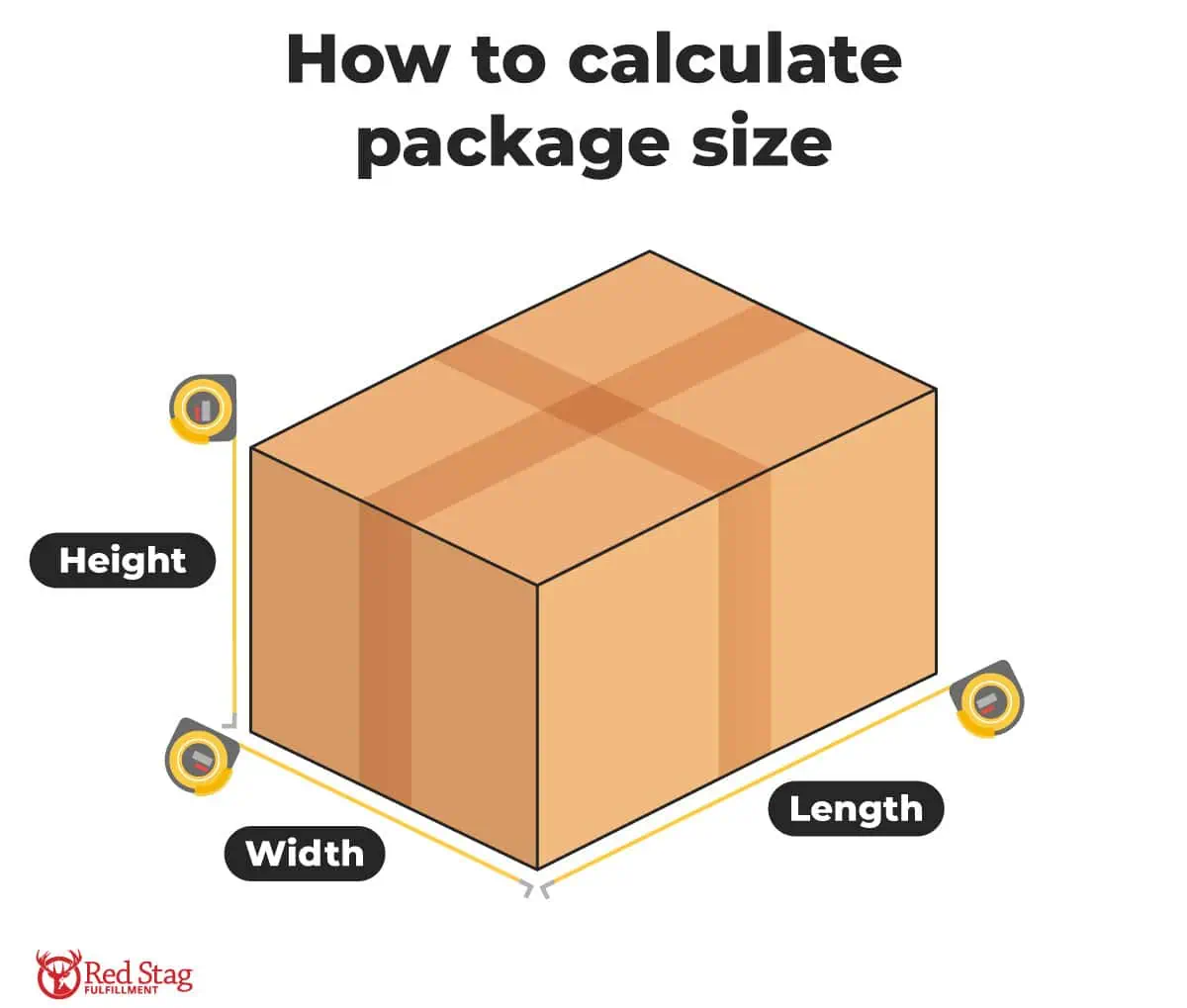
To give you an idea of how to calculate package size, here are a few examples:
Box dimensions: 40″ × 27″ × 26″
Length (40″) doesn’t exceed 96″ threshold
Combined calculation: 40″ + (2 × 27″) + (2 × 26″) = 146″
Cubic volume: 40 × 27 × 26 = 28,080 in³
Result: Exceeds 130″ limit AND exceeds 17,280 in³—the Large Package surcharge applies
Box dimensions: 35″ × 15″ × 10″
Length (35″) is well under the threshold
Combined calculation: 35″ + (2 × 15″) + (2 × 10″) = 85″
Cubic volume: 35 × 15 × 10 = 5,250 in³
Result: Under all limits—no Large Package surcharge
Large bedding set (new 2026 example):
Box dimensions: 30″ × 24″ × 24″
Length (30″) doesn’t exceed 96″ threshold
Combined calculation: 30″ + (2 × 24″) + (2 × 24″) = 126″
Cubic volume: 30 × 24 × 24 = 17,280 in³
Result: Under old limits but exactly meets the new cubic threshold—the Large Package Surcharge now applies
Heavy equipment component (new 2026 example):
Box dimensions: 24″ × 18″ × 18″
Length (24″) doesn’t exceed 96″ threshold
Combined calculation: 24″ + (2 × 18″) + (2 × 18″) = 96″
Cubic volume: 24 × 18 × 18 = 7,776 in³
Actual weight: 115 lbs
Result: Under all size limits but exceeds the new 110 lb weight threshold—the Large Package Surcharge now applies
PRO TIP: Use our free surcharge calculator to instantly check whether your packages trigger the new cubic volume and weight thresholds. Just plug in your dimensions—it does the math for you.
Dimensional weight calculation
While the UPS Large Package Surcharge is an important consideration, dimensional weight (DIM weight) can also affect pricing for large (but lightweight) items.
In simple terms, dimensional weight means you pay based on how much space your package occupies, not just its weight. If your package is large but light, the shipping cost could be higher due to its size.
UPS charges based on the greater of the actual weight or dimensional weight.
To calculate dimensional weight, multiply the length, width, and height of your package (in inches) and divide by 139 for daily rates or 166 for retail shipments.
PRO TIP: You don’t have to calculate dimensional weight manually. Use Red Stag Fulfillment’s dimensional weight calculator instead.
For example, if your package measures 10″ × 20″ × 30″, the calculation would be:
(10 × 20 × 30) ÷ 139 = 44 lbs
If your package weighs less than 44 lbs, UPS will charge you based on the dimensional weight.
This means you’d pay for 44 lbs of shipping, even if your package only weighs 20 lbs.
NOTE: For packages that have incurred the Large Package Surcharge, UPS applies a minimum billable weight of 90 lbs, even if both physical and dimensional weights are lower.
Beware of exceeding the Over Maximum Limits range
Although the UPS Large Package Surcharge covers oversized items, there’s an even stricter threshold to watch out for: Over Maximum Limits.
UPS typically does not accept packages that exceed these limits:
Weight: 150 lbs
Length: 108″
Combined size: 165″ total of combined length + girth (2 x width + 2 x height)
If a package is identified in UPS’ system as exceeding their maximum size restrictions, it will either be returned to the sender or incur a substantial flat fee of $1,875, significantly higher than the Large Package Surcharge.
NOTE: The Over Maximum Limits fee increased from $1,775 to $1,875 effective December 22, 2025. This mirrors FedEx’s Ground Unauthorized Package Charge, which also sits at $1,875. International Over Maximum fees may vary by destination.
Additional Handling Surcharge changes for 2026
While the Large Package Surcharge applies to the biggest packages, UPS also updated the Additional Handling Surcharge criteria effective January 26, 2026.
The Additional Handling Surcharge now applies if a package meets any of these criteria:
Longest side exceeds 48″
Second-longest side exceeds 30″
Length + girth exceeds 105″
Cubic volume exceeds 10,368 in³ (effective January 26, 2026)
Actual weight exceeds 50 lbs
Nonstandard packaging
Additional Handling Surcharge rates (effective December 22, 2025)
| Reason | Zone 2 | Zones 3-4 | Zones 5-6 | Zone 7+ |
|---|---|---|---|---|
| Weight | $46.50 | $50.75 | $56.25 | $58.75 |
| Dimensions/Cubic Size | $30.00 | $33.25 | $38.50 | $40.50 |
| Length | $30.00 | $33.25 | $38.50 | $40.50 |
| Width | $30.00 | $33.25 | $38.50 | $40.50 |
| Packaging | $26.75 | $31.00 | $33.25 | $33.75 |
NOTE: If a package triggers multiple Additional Handling criteria, UPS applies only the highest surcharge. And if a package qualifies for the Large Package Surcharge, UPS does not assess an Additional Handling charge.
The UPS Large Package Surcharge rarely appears alone on your shipping bill.
When shipping large items, multiple surcharges often stack together, significantly increasing the final cost.
The most frequent surcharge combinations that affect large packages include:
Large Package Surcharge: The core fee for packages exceeding UPS dimensional, cubic volume, or weight limits
Dimensional Weight: Applies when dimensional weight exceeds physical weight
Additional Handling: Applies to packages requiring special handling due to weight, size, cubic volume, or packaging (not added if Large Package Surcharge is already applied)
Residential Delivery: Added for home deliveries
Fuel: Varies weekly based on fuel costs
There are a few other surcharges not mentioned here, like Incorrect Weight, Extended Delivery Area (DAS), Dangerous Goods, and Delivery Reattempt, which only apply in some specific situations.
PRO TIP: For businesses that regularly ship via UPS, regular invoice audits are crucial for catching incorrect or duplicate charges.
Peak season demand surcharges
During peak demand periods (typically late September through mid-January), UPS adds demand surcharges on top of base surcharge rates.
For the 2025-2026 peak season, UPS implemented tiered demand surcharges:
Demand Surcharge — Additional Handling
| Period | Amount per package |
|---|---|
| Sept. 28 – Nov. 22, 2025 | $8.25 |
| Nov. 23 – Dec. 27, 2025 | $10.80 |
| Dec. 28, 2025 – Jan. 17, 2026 | $8.25 |
Demand Surcharge — Large Package
| Period | Amount per package |
|---|---|
| Sept. 28 – Nov. 22, 2025 | $90.50 |
| Nov. 23 – Dec. 27, 2025 | $107.00 |
| Dec. 28, 2025 – Jan. 17, 2026 | $90.50 |
Demand Surcharge — Over Maximum Limits
| Period | Amount per package |
|---|---|
| Sept. 28 – Nov. 22, 2025 | $485 |
| Nov. 23 – Dec. 27, 2025 | $540 |
| Dec. 28, 2025 – Jan. 17, 2026 | $485 |
NOTE: These demand surcharges are added to the base surcharge amounts. For example, a Zone 2 commercial package that triggers the Large Package Surcharge during peak season (Nov. 23 – Dec. 27) would incur $219.50 (base) + $107.00 (demand) = $326.50 in size-related surcharges alone.
How to avoid or reduce surcharges
Here are some strategies to avoid or reduce surcharges when dealing with large or oversized packages.
Package optimization strategies
For optimal rates, keep your package under 70 lbs (i.e., UPS’ threshold for a heavy package) and aim for a length under 48″ and the second-longest side under 30″ to avoid the Additional Handling surcharge.
New for 2026: Also calculate your cubic volume. Keep packages under 10,368 in³ to avoid the Additional Handling surcharge, and under 17,280 in³ to avoid the Large Package Surcharge.
Sometimes, you’ll have to incur an Additional Handling surcharge, but you can still avoid the pricier UPS Large Package Surcharge by staying under:
96″ in length
130″ in length plus girth
17,280 in³ in cubic volume
110 lbs in actual weight
Also, be mindful when packing. Choose a sturdy corrugated box with 2 to 4″ of cushioning space on all sides for enough padding. Avoid oversized boxes that add unnecessary bulk and shipping costs. Good places to get a box of a specific size are:
As for packing, take a quality-over-quantity approach. Using the right materials and proper techniques eliminates the need for excessive bubble wrap and packing peanuts. Read our guide for shipping oversized packages for more information.
Calculate cubic volume—not just length and girth
With the new 2026 criteria, always calculate your package’s cubic volume (length × width × height) in addition to traditional measurements.
Example: A package measuring 24″ × 24″ × 18″ has these characteristics:
Longest side: 24″ (under the 48″ AHS threshold)
Second-longest side: 24″ (under the 30″ AHS threshold)
Combined length and girth: 108″ (under the 105″ AHS threshold and 130″ LPS threshold)
Cubic volume: 10,368 in³ (triggers the Additional Handling Surcharge under the new criteria)
Without calculating cubic volume, you might assume this package is surcharge-free. Under the 2026 rules, it incurs the Additional Handling Surcharge.
PRO TIP: Use our free surcharge calculator to instantly check whether your packages trigger the new cubic volume thresholds.
Alternative solutions
When standard package optimization isn’t enough to get you below the Large Package Surcharge threshold, here are other proven strategies to reduce costs on large shipments.
Split shipments strategically
Breaking down large packages into smaller ones can cost less than paying Large Package Surcharges.
This works best for separable items like furniture or retail goods, though you’ll need to weigh the administrative overhead against potential savings.
Compare carrier pricing
While UPS provides reliable service, other carriers may offer better rates for your specific package size and destination. So compare FedEx, UPS, and USPS options.
NOTE: Both UPS and FedEx now use the same cubic volume (17,280 in³) and weight (110 lbs) thresholds for their large package surcharges. The main differences are in zone-based pricing and effective dates.
Consider freight services
Switch to freight for truly oversized items. When packages consistently trigger size surcharges, less-than-truckload (LTL) and even full-truckload (FTL) shipping typically provide better value.
Score the best UPS rates with smart negotiation
Did you know that UPS and other carriers are willing to negotiate rates, particularly with businesses?
Even if you always ship large packages, you can secure substantial discounts by leveraging volume and strategic planning.
With the right approach, you can significantly lower your shipping costs while still taking advantage of UPS’ exceptional services.
Your UPS contract should focus on three critical elements:
Annual volume commitments to lock in your discounts
Service level guarantees to protect your shipping standards
Peak season adjustments to maintain predictable costs
This is where partnering with Red Stag Fulfillment gives you an advantage. We negotiate UPS rates using our combined shipping volume across all clients—giving you access to deeper discounts than most companies can achieve on their own. You’ll benefit from our pre-negotiated rates, including reduced surcharges and other cost-saving measures, without managing carrier relationships yourself.
Quick reference: 2026 UPS size and weight surcharges
Large Package Surcharge triggers:
Length > 96″
Length + girth > 130″
Cubic volume > 17,280 in³
Weight > 110 lbs
Additional Handling Surcharge triggers:
Longest side > 48″
Second-longest side > 30″
Length + girth > 105″
Cubic volume > 10,368 in³
Weight > 50 lbs
Over Maximum Limits triggers:
Length > 108″
Length + girth > 165″
Weight > 150 lbs


